


Welcome to the reading list, a weekly roundup of what happened in infrastructure, buildings, and building things. Roughly 2/3rds of the reading list is paywalled, so for full access become a paid subscriber.
No newsletter this week, but I’m working on a longer essay about the history of Operation Breakthrough (a greatly expanded and more thorough version of an older essay) that will be out next week.
Housing
Its obvious that getting housing projects permitted in the US is often quite difficult, but it’s not always obvious how difficult. Previous research by economist Ed Glaeser has tried to quantify this by estimating the “hedonic” value of land (how much people would pay for a given amount of land space), which gives an implied value for how much the “permit” portion is worth. Now Economists Evan Soltas and Jonathan Gruber have a paper out looking at how much of a burden permitting is in the city of Los Angeles in dollar terms. From the abstract: “Permitting costs are widely cited, but little analyzed, as a key burden on housing development in leading U.S. cities. We measure them using an implicit market for “ready-to-issue” permits in Los Angeles, where landowners can prepay permitting costs and sell preapproved land to developers at a premium. Using a repeat-listing difference-in-differences estimator, we find developers pay 50 percent more ($48 per square foot) for preapproved land. Comparing similar proposed developments, preapproval raises the probability of completing construction within four years of site acquisition by 10 percentage points (30 percent). Permitting can explain one third of the gap in Los Angeles between home prices and construction costs.” Would love to see more research like this for other metro areas [X]
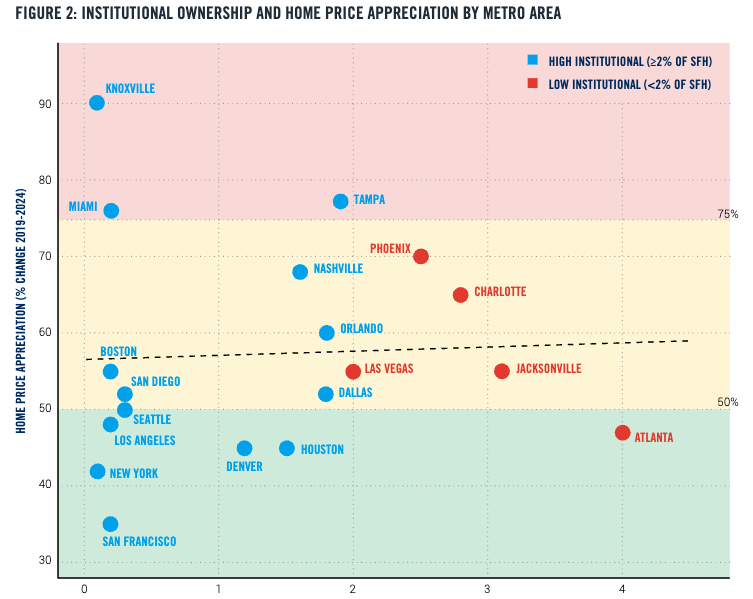
Restricting institutional investors from owning single family homes continues to be a major political talking point, but I remain unconvinced that this has much impact on home prices. More evidence for this: A 2022 ban on investors from buying homes to rent in the Netherlands didn’t affect home prices [SSRN]. And there doesn’t seem to be much relationship between institutional ownership and home price appreciation at the city level. [Progressive Policy]
The Atlantic has a good article about how high-end housing can increase housing supply across income levels. When people move into a new, expensive unit, many of them will move from lower-cost units, which in turn will be occupied by people moving from even lower cost units, and so on. “...three researchers looked in extraordinary detail at the effects of a new 43-story condo project in Honolulu. The building, called the Central, sits right behind the giant Ala Moana shopping center, halfway between downtown and the beachfront hotels of Waikiki. It comprises both subsidized and market-rate units, priced at around $780,000 for the former, and $1.25 million for the latter. What the researchers found was that the new housing freed up older, cheaper apartments, which, in turn, became occupied by people leaving behind still-cheaper homes elsewhere in the city, and so on. A new rung higher up the housing ladder permitted people lower down to climb. The paper estimates the tower’s 512 units created at least 557 vacancies across the city—with some units opening up no empty apartments (if, say, an adult child moved to the Central from their parents’ home) and others creating as many as four vacancies around town.” [The Atlantic]
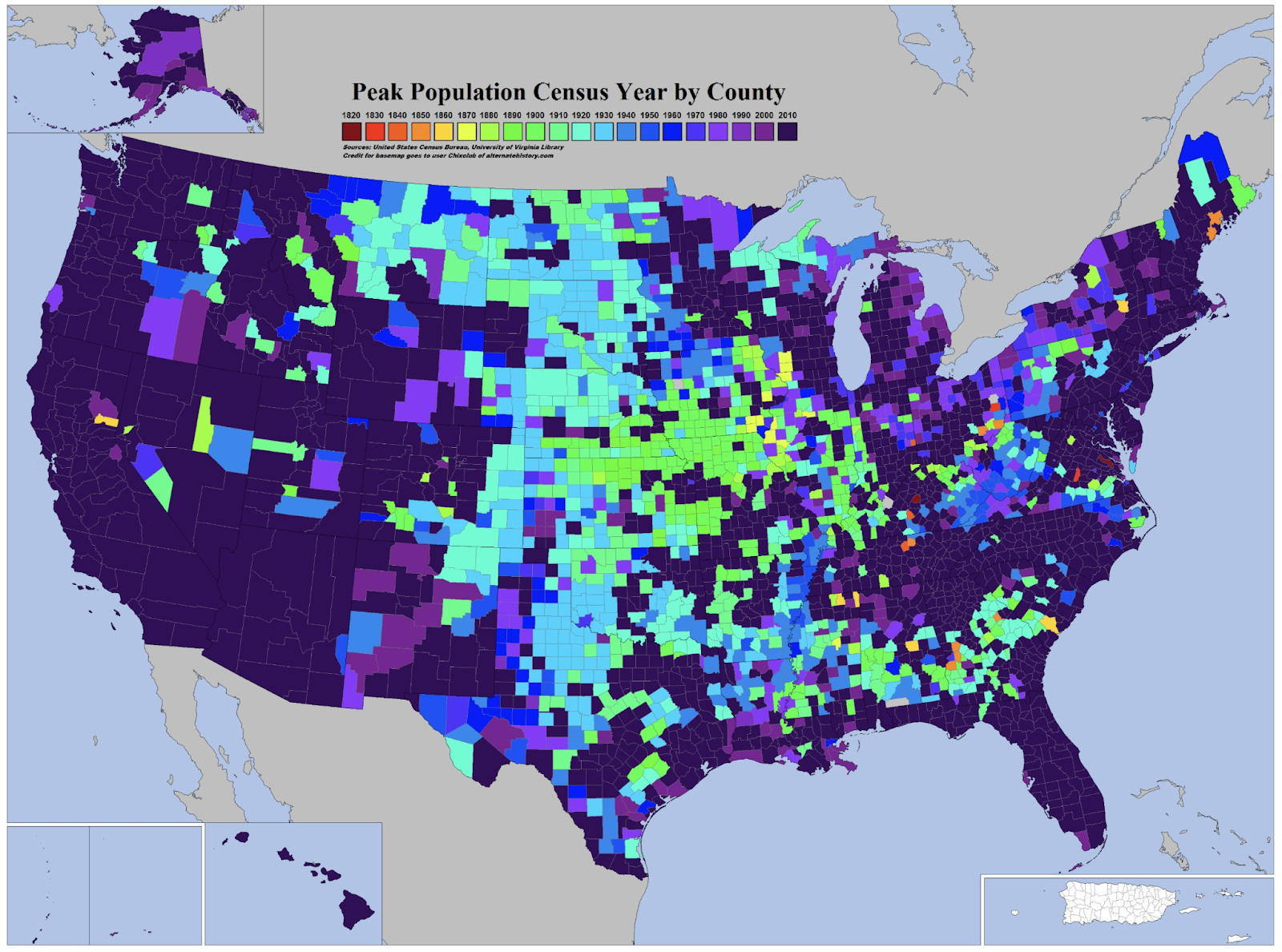
When population peaked in various US counties. [X]
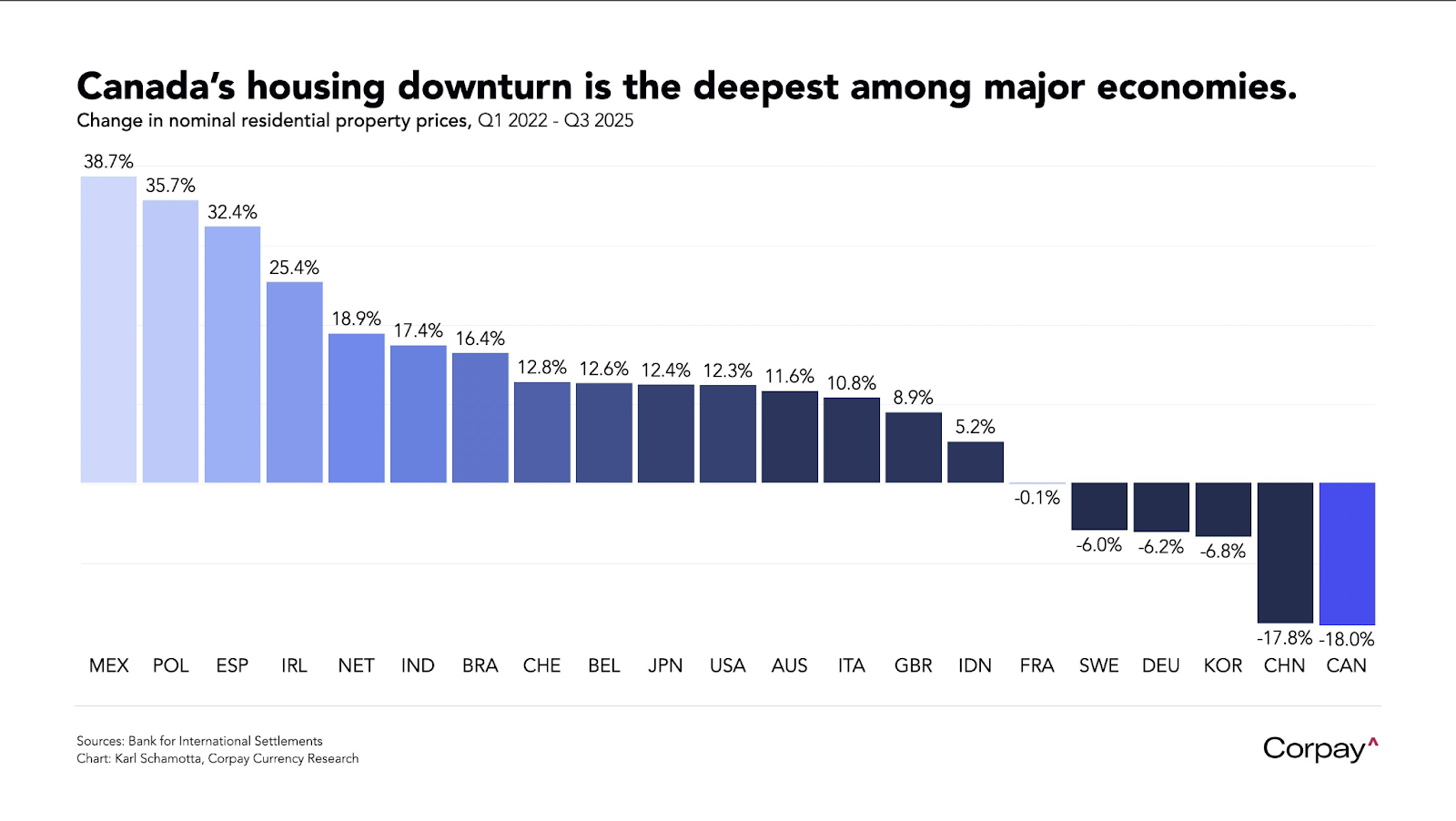
How home prices have changed in several countries over the last several years. Why are prices up so much in Mexico? [X]
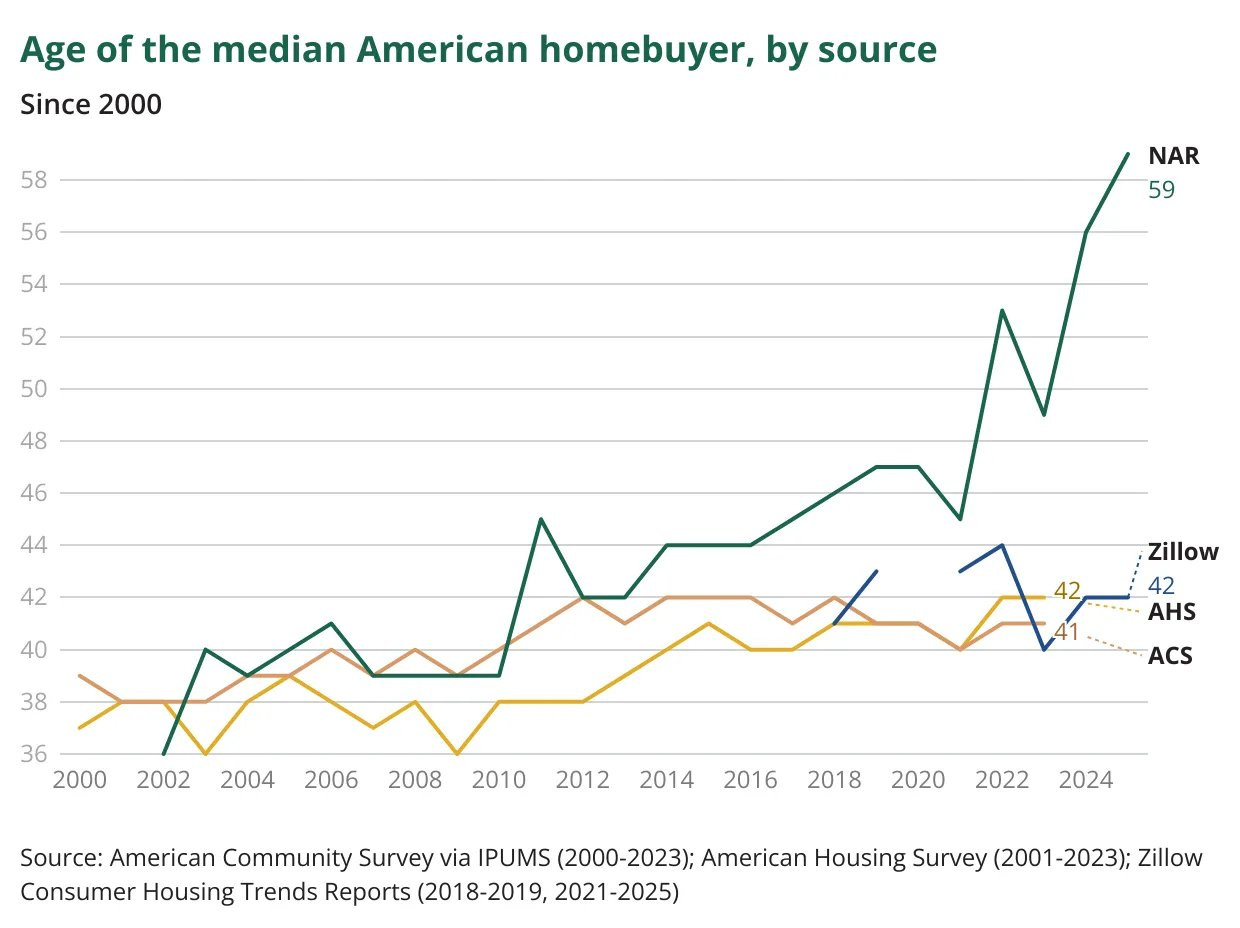
IFP colleague Connor O’Brien noted that statistics about the skyrocketing age of homebuyers in the US is based on a mailed survey by the National Association of Realtors that is far higher than other estimates. [X]
Manufacturing
It really seems to be the end of an era for Japanese TV manufacturing. A few weeks ago Sony spun off its TV business into a joint venture with China. Now Panasonic is exiting the TV business as well. “Today, it announced that Chinese company Skyworth will take over manufacturing, marketing, and selling Panasonic-branded TVs.” [Arstechnica]
From the annals of “environmental laws give NIMBYs the tools to endlessly delay projects.” Construction of a $100 billion Micron memory fab in New York is being held up by a lawsuit from six local residents who oppose the project. They’re arguing that the environmental impact study (which took nearly two years to complete) was “unnecessarily rushed.” [X]
Expanding US electricity generation capacity has been bottlenecked by gas turbine suppliers, but it looks like the major manufacturers are significantly expanding their capacity. ““We expect at least 19 GW of total available equipment capacity by 2028, increasing to 49 [GW] and 76 GW by 2029 and 2030,” Jefferies said.” [Utility Dive]
The Economist on the Chinese threat to German manufacturing. “What many Germans call the “China shock 2.0” plays into fears that the country’s industrial heart is being hollowed out. In Baden-Württemberg, a rich state that holds an election on March 8th, candidates are issuing dire prophecies about becoming the “Detroit of Europe”.” [The Economist]