


Welcome to the reading list, a weekly roundup of news and links related to buildings, infrastructure, and industrial technology. This week we look at chilling effects in the build-to-rent sector, how fast could robot manufacturing scale up, PJM’s new interconnection queue, the backlash against battery storage, and more. Roughly 2/3rds of the reading list is paywalled, so for full access become a paid subscriber.
War in Iran
The latest war-related supply chain disruption? Printed circuit boards. “Iran struck Saudi Arabia’s Jubail petrochemical complex in early April, forcing a halt in production of high-purity polyphenylene ether (PPE) resin — a critical base material used to manufacture PCB laminates…In April alone, PCB prices surged as much as 40% from March, Goldman Sachs analysts said in a recent note.” [Reuters]
Thanks to high jet fuel prices, India’s airlines are apparently “on the verge of closing down.” [SCMP] And the biggest US airlines collectively spent $1.2 billion more on jet fuel in the first quarter of 2026 compared to 2025. [Sherwood]
Shipping isn’t the only sort of Strait of Hormuz traffic that the war has the potential to disrupt. The strait also carries a large number of undersea cables that could possibly be damaged if damaged ships drag their anchors across them. ““In a situation of active military operations, the risk of unintentional damage increases, and the longer this conflict lasts, the higher the likelihood of unintentional damage,” Kotkin said. A similar incident occurred in 2024, when a commercial vessel attacked by Iran-aligned Houthis drifted in the Red Sea and severed cables with its anchor.” [Reuters]
Housing
One problem with ill-considered legislation is that negative consequences can sometimes be caused by the mere possibility that it passes. So if you have a housing bill with a provision that would make it much more difficult to build homes for rent (by requiring institutional owners to divest those homes after seven years), even the mere threat of it passing is enough to slow down rental housing construction. “Developer TerraLane Communities was about to start construction on two new housing communities in Arizona and Texas, projects that would create around 300 new single-family homes to rent out. But before any shovels got in the ground, the Senate passed a bill that severely restricts the build-to-rent business. Uncertain about the industry’s legislative future, investors demanded that TerraLane pause the project. The firm had five other potential build-to-rent deals that it is no longer pursuing.” [WSJ]
When is the best time to buy and sell a home? The graphic below tracks the conventional wisdom – better to buy in the summer when there’s more listings, and sell in the winter when there’s fewer — but it’s interesting to see the data. [Substack]

We previously looked at UK building standards which, if complied with, effectively require houses to have extremely small windows so they can be cleaned by an elderly woman without stretching. The Wall Street Journal takes a closer look at this requirement. [WSJ]
Americans who are importing their homebuilding materials from China. [CNN]
So far this year Idaho has passed six bills to make it easier to build housing. [Sightline]
Manufacturing
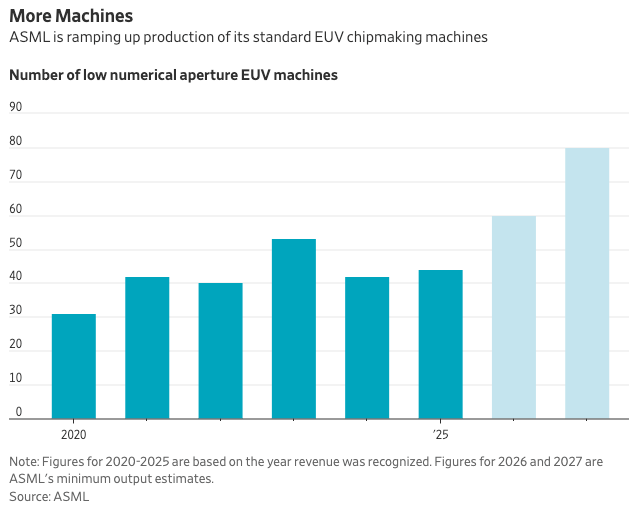
The data center buildout continues to put pressure on every related area of the supply chain for them. To meet the rising demand for AI chips, ASML is ramping up production of EUV machines. [WSJ]
China is no longer the sole producer of a critical mineral, samarium, used to make military-grade magnets. [WSJ]
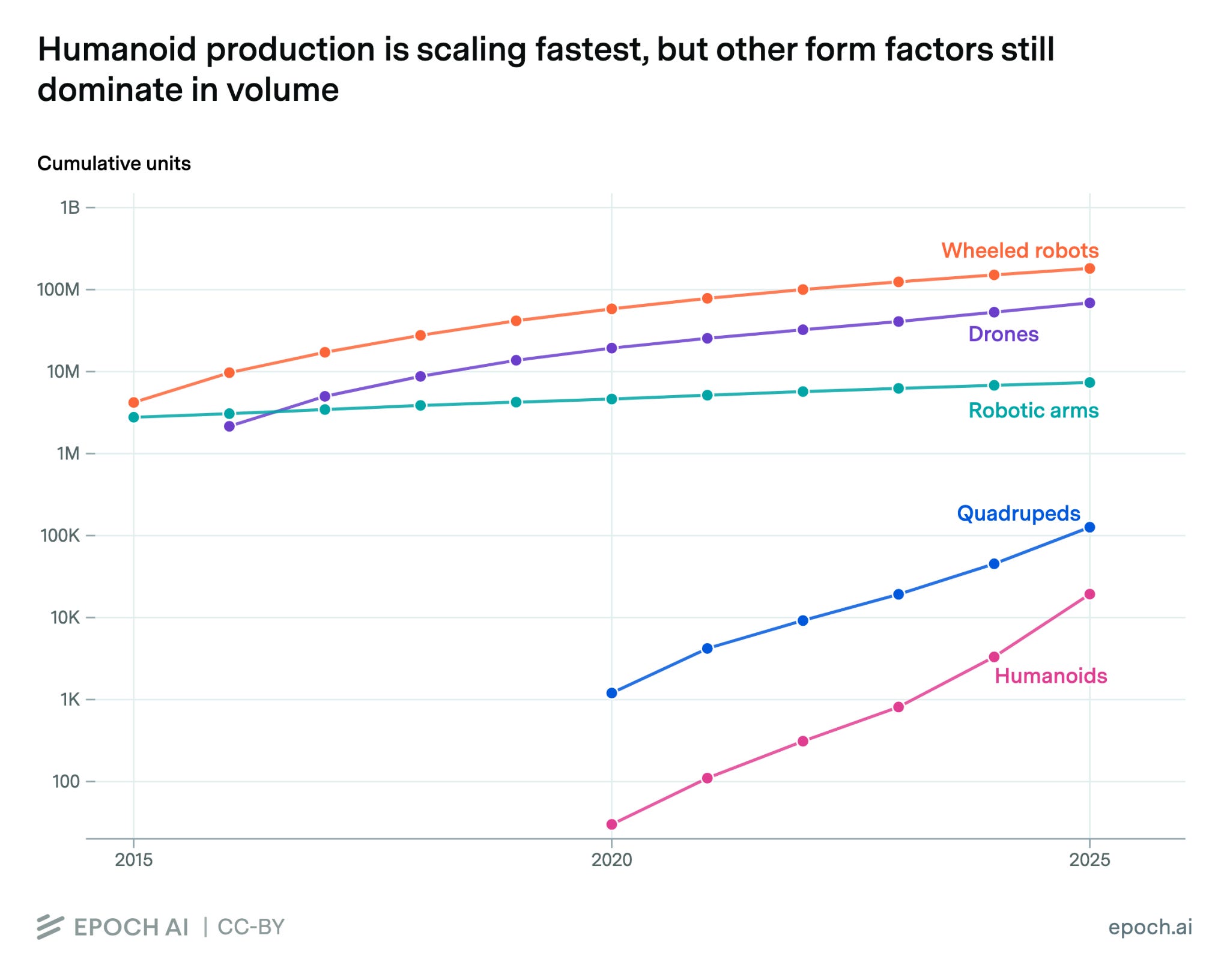
AI-analysis nonprofit Epoch AI asks how quickly robot manufacturing could scale up. “Historical demand shocks such as WWII mobilization, or the production of drones following the war in Ukraine have accelerated production growth rates by 1.4–2.2x in the most comparable cases. This would imply doubling times of roughly 5–8 months for quadrupeds and 10–16 months for mature form factors. It’s unclear whether these cases are optimistic or pessimistic for robotics.” [Epoch]
The US’s recent…unreliability with regards to its foreign allies has apparently inspired European countries to take defense production more seriously. Germany has ramped up ammunition manufacturing, and is now producing more ammunition than the US. [Newsweek]
On the other hand, the US is apparently seriously considering using foreign shipyards for naval ship design and component manufacturing. [USNI News]