


Welcome to the reading list, a weekly roundup of news and links related to buildings, infrastructure and industrial technology. This week we look at households without homeowners insurance, crackdowns on AI chip smuggling, Japan’s two electrical frequencies, Meta’s AI compute business, and more. Roughly 2/3rds of the reading list is paywalled, so for full access become a paid subscriber!
Housing
Someone making the (somewhat dubious) point that fixed-rate mortgages have many similar impacts as rent control. The biggest difference, obviously, is that fixed-rate mortgages don’t disincentivize creating new housing supply the way that rent control does, but it’s interesting to see the similarities. “A homeowner with a 3 percent mortgage is, in practice, protected from the market in much the same way as a tenant in a rent-stabilized apartment. Both receive a valuable incumbent benefit. Both face a large penalty for moving. Both may remain in housing that no longer fits their needs because leaving would mean surrendering that benefit. And both systems impose costs on outsiders: prospective tenants in one case, prospective buyers in the other.” [Substack]
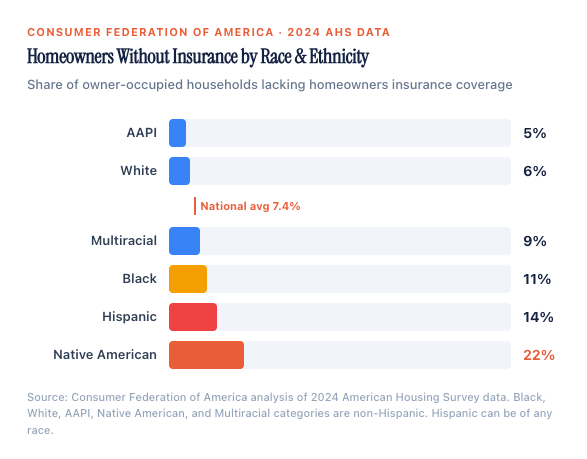
Apparently one in seven homeowners in the US don’t have homeowners insurance? [Insurance Dimes]
Manufacturing
It looks like we’re starting to see more crackdowns on smuggling AI chips into China from Taiwan. “Taiwan government agencies raided the offices of Super Micro Computer and several of its local affiliates, deepening an investigation into the alleged smuggling of Nvidia chips into China using the company’s servers.” [Japan Times]
Ford rehired a few hundred quality inspectors that it had tried to replace with AI. [BBC]
Sony will stop making physical discs for playstation games in 2028. [IGN]
The US Bureau of Industry and Security (BIS) denied Polestar, a brand spinoff of Volvo which is owned by Chinese company Geely, an authorization to sell cars in the US starting in 2027. Volvo, which is also owned by Geely, isn’t yet affected for some reason. “Polestar clearly didn’t see this situation coming. The automaker announced a reboot plan in February, which would’ve seen a slew of new product coming to the U.S. as the company grew the lineup. Global production of the Polestar 3 was moved from Chengdu, China, to Volvo’s Ridgeville, South Carolina, plant specifically to avoid the Trump Administration’s tariffs. The Polestar 3 currently rolls off the South Carolina assembly line alongside its platform mate, the Volvo EX90.” [The Drive]
China is building a factory to produce, among other things, personalized cancer vaccines. “The facility will house cell therapy research laboratories together with a production line of the company’s flagship product, LK101, a personalised cancer vaccine that analyses each patient’s tumour DNA to pinpoint the specific genetic mutations driving the disease. With AI, the company said the procedure could be completed in a day.” [SCMP]
Car companies are apparently switching to aluminum wiring due to the high costs of copper. [Reuters]
South Korea plans to spend $1 trillion on memory chip fabs and humanoid robots. “The most costly of the megaprojects involves a commitment by Samsung and SK Hynix of $585 billion to build new chip fabrication plants in the southwest provinces of South Korea, along with boosting semiconductor fab construction in the Seoul capital region, according to Reuters. The government’s goal is to double South Korea’s production of dynamic random-access memory (DRAM) within five years.” [Ars Technica]
Meanwhile, the Wall Street Journal on the delays to a Micron memory chip fab that was supposed to start construction two years ago, but has been held back by, among other things, bats. “Mr. Schumer has described Micron’s site as “open fields,” but it includes hundreds of acres of wetlands and forestland that are nesting areas for endangered bats. This makes permitting and building more complicated. Trees can only be chopped down when bats aren’t nesting—i.e., from November to March. To obtain federal and state permits, Micron committed to spend $1 million to protect the bats and install 10 “bat houses.” The manufacturer also agreed to provide on-site child-care for workers and enter into project labor agreements with unions in return for $6 billion in federal largesse.” [WSJ]