


Welcome to the reading list, a weekly roundup of news and links related to buildings, infrastructure, and industrial technology. This week we look at China’s EV subsidies, the future of aeroderivative gas turbines, a US-Saudi nuclear deal, defective roadway guardrails, and more. Roughly 2/3rds of the reading list is paywalled, so for full access become a paid subscriber.
Housing and Cities
The CEO of DR Horton, largest homebuilder in the US, thinks that the 21st Century ROAD to Housing Act won’t have much impact on housing supply or demand in the short term. [X]
The Financial Times on why socialists should embrace luxury apartments. “Above all, high-end developments unlock long housing chains. As higher-income households move into newly built units, they free up older properties, raising supply and slashing prices for middle- and lower-end housing through a process known as filtering. Numerous international studies underscore this positive ripple effect.” A good sentiment, though stating it to the readers of the Financial Times is probably preaching to the choir. [FT]
Last week we noted that Saronic, which had been slated to be a major tenant for California Forever’s shipbuilding facility, had instead opted to locate their operations in Texas. Someone claimed on Twitter that California was, in fact, never really in consideration, and that overtures to California Forever were entirely to secure better terms in Texas. [X]
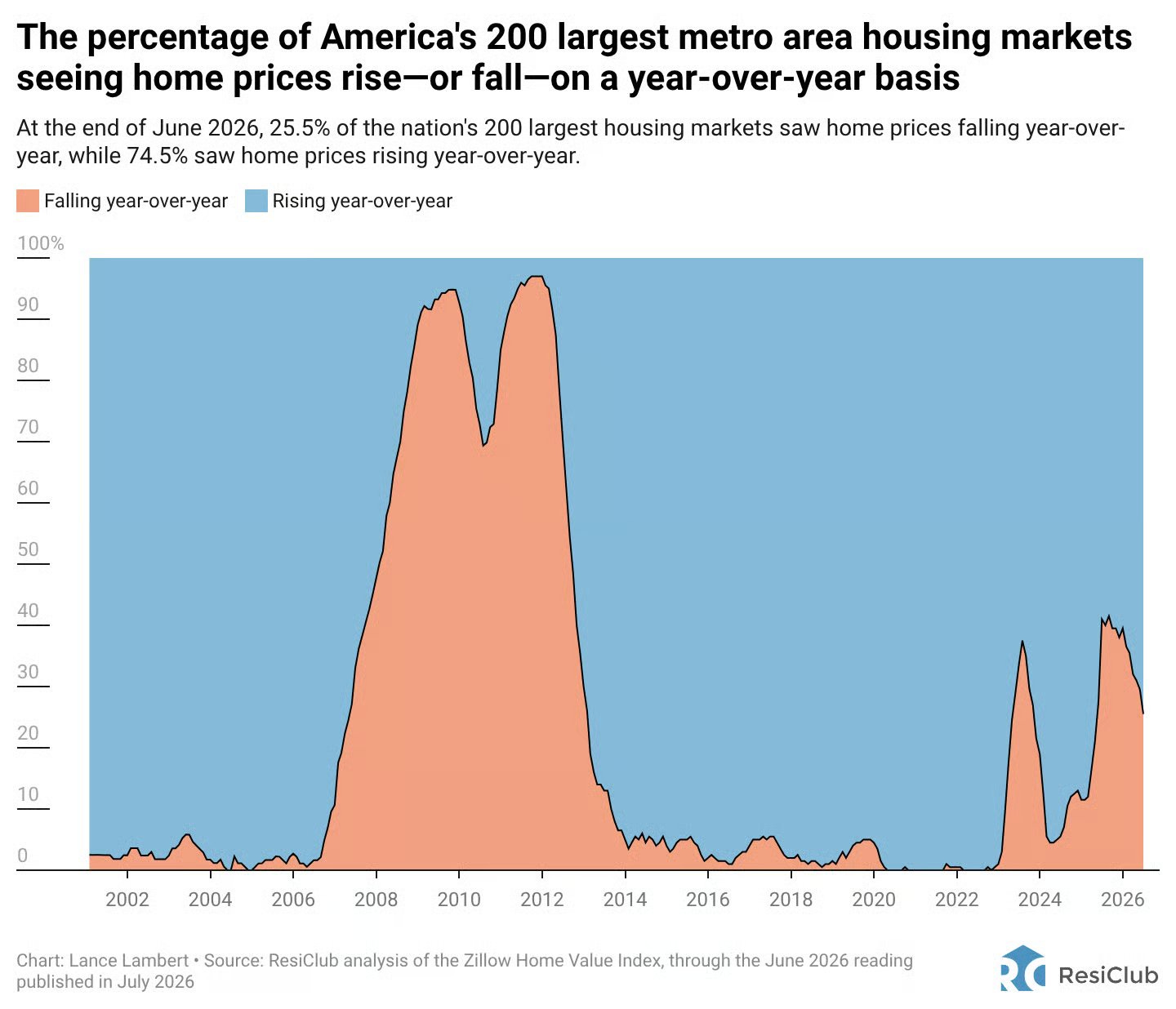
The fraction of housing markets in the US where prices are rising vs falling over time, via ResiClub. [X]
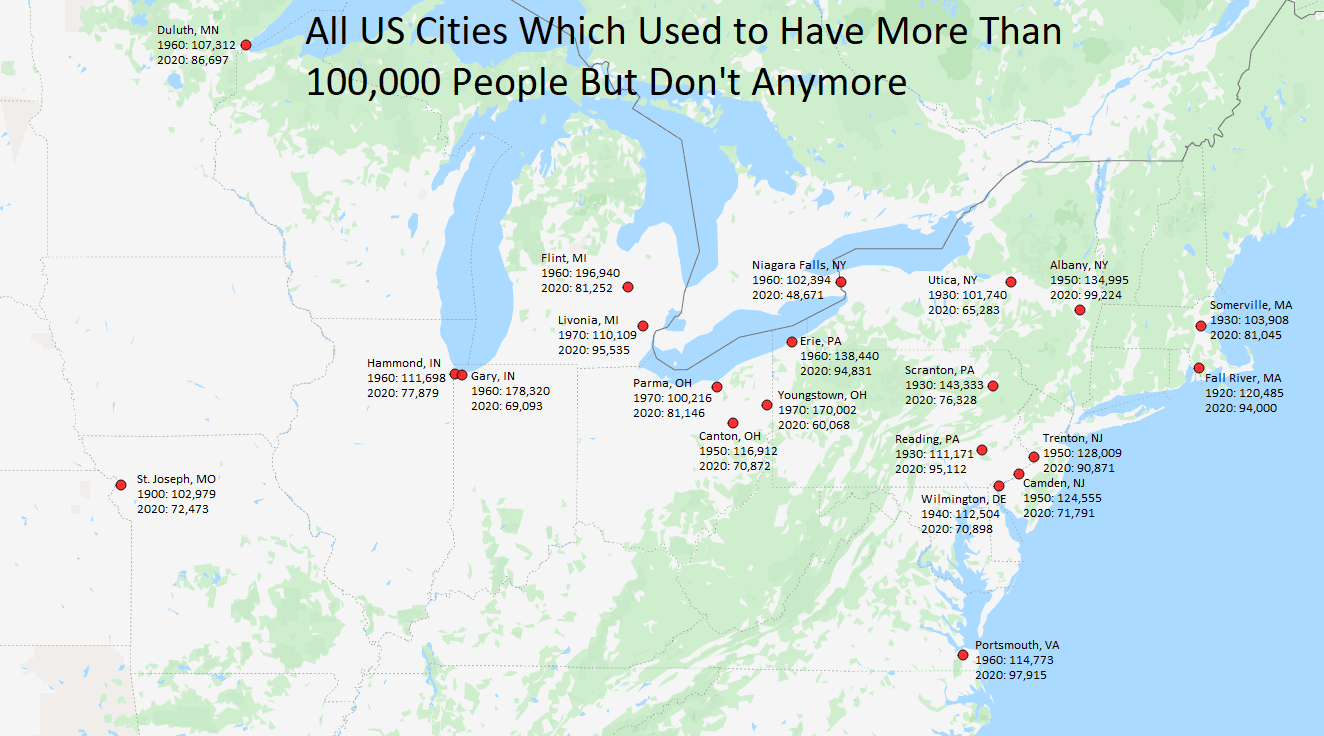
US cities which used to have at least 100,000 people but no longer do. [Reddit]
Manufacturing
TSMC is accelerating its investment in Arizona fabs due to enormous AI demand. [CNBC] And TSMC plans to raise prices by up to 10% starting in 2027. [Yahoo Finance]
As China’s EV industry gets more mature, China is beginning to roll back subsidies for the sector. “Starting Sept. 1, lithium-ion batteries will be subject to a 2% consumption tax, which will double to 4% a year later, according to a Friday announcement by the Ministry of Finance.” [X]
Energy
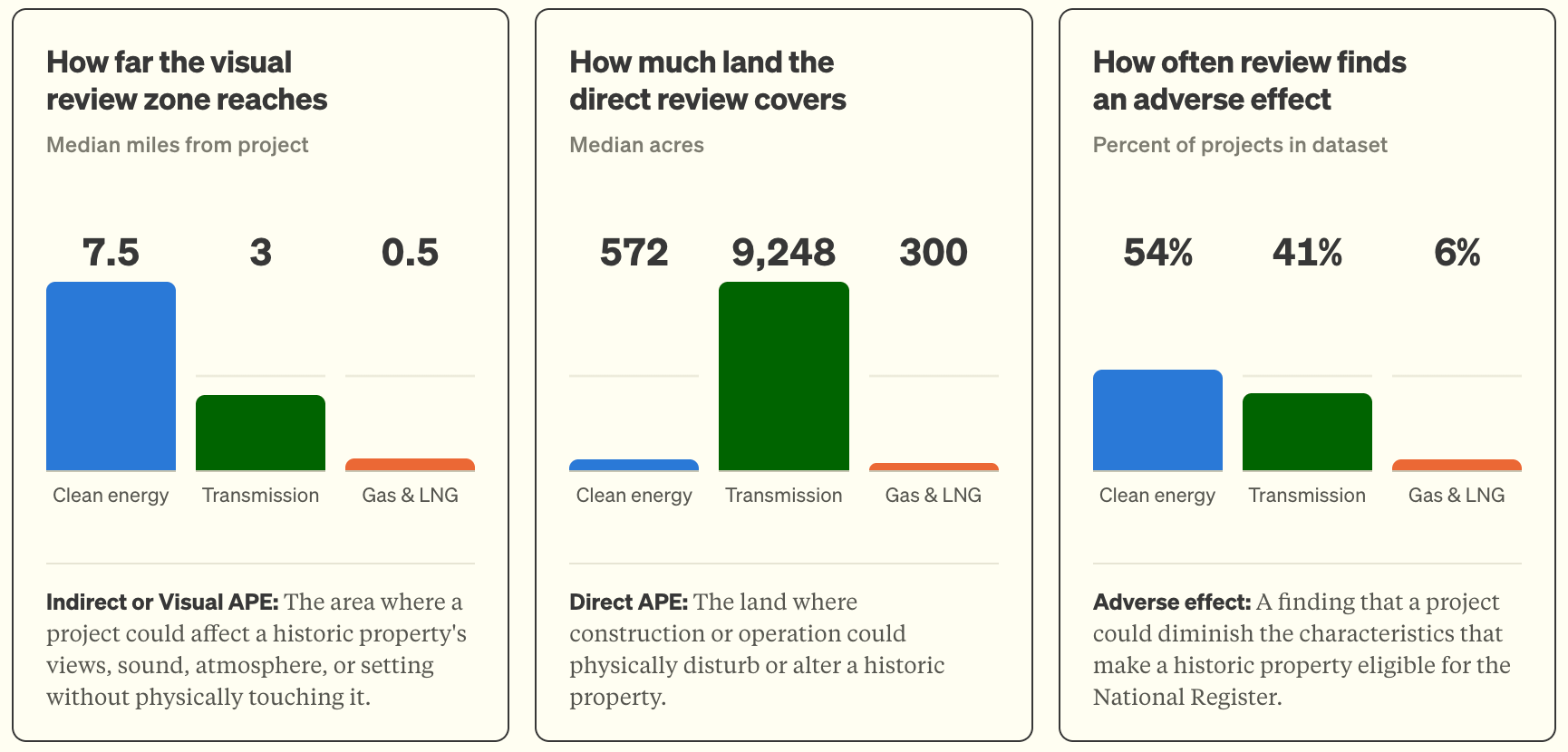
The National Historic Preservation Act (NHPA) requires considering whether a new project will impact the view of some existing historic property. Thus the more land area a project extends over, or the taller it is, the more potential view impacts, and the greater the NHPA review burden. This is bad news for clean energy projects like wind and solar, which have a much “viewprint” than oil and gas projects. “We examined nearly 100 recent energy projects and found a striking discrepancy: compared to fossil energy projects, clean energy and transmission projects have review areas about 10 times larger and are more than 8 times as likely to receive an “adverse effect” finding — triggering additional process, delay, and mitigation obligations.” [IFP]
Tim Latimer, CEO of geothermal startup Fervo Energy, on what the geothermal industry can learn from SpaceX. Basically, instead of trying to develop an ambitious technology in one shot, start with a simpler, less ambitious version of it, and advance via learning by doing. “...much like the Starship example, starting with the end state and trying to solve all the various technology challenges all in one go would be incredibly challenging. So Fervo has opted to take a learning by doing path that parallels SpaceX. Project Red was our first pilot. Rather than try to drill a super hot or super deep concept right out of the gate, we completed a project in a category called “near-field Enhanced Geothermal Systems” (NF-EGS). This meant going to a location that was adjacent to a producing geothermal site, so the geothermal gradient was higher, even though the permeability in the part of the field we had selected did not support prior development with conventional technology.” [LinkedIn]