Welcome to the reading list, a weekly roundup of news and links related to buildings, infrastructure and industrial technology. This week we look at Tokyo’s cheap housing and expensive land, the House response to the Senate housing bill, an IED near an Alabama dam, Fervo’s IPO, and more. Roughly 2/3rds of the reading list is paywalled, so for full access become a paid subscriber.
Housekeeping items:
No essay this week because of a respiratory illness that is carving through our household like Sherman through Georgia, but I’m working on a piece about the build to rent housing industry that should be out next week.
I gave a talk about why major building collapse is so uncommon at Antithesis’ Bug Bash a few weeks ago. You can watch the talk here.
War in Iran
The Economist on why the closure of the Strait of Hormuz doesn’t seem to have yet created a worldwide oil crisis: other exporters (like the US) have raised their output, and many larger importers (like China) are importing less. [The Economist]
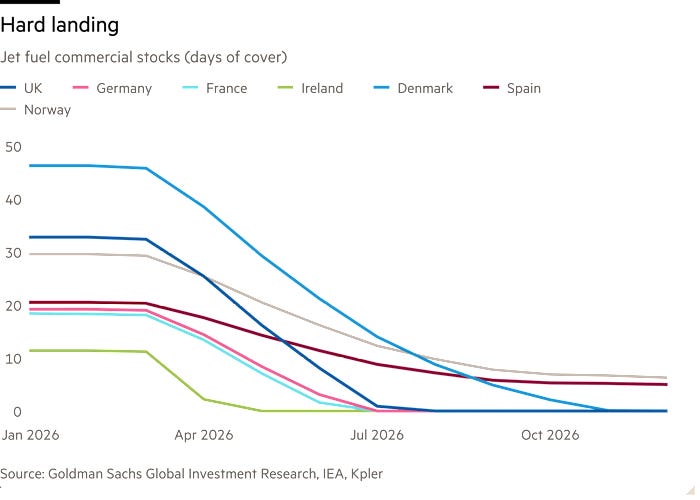
On the other hand, it seems like supplies of various petroleum products are starting to get thin. The owner of an oil change company is claiming that US consumer motor oil supplies are going to start getting thin in a few weeks. [X] And European jet fuel stockpiles are apparently almost exhausted. [X]
Some Japanese snack manufacturers are changing to black and white packaging due to ink supply disruptions. [AP News] The disruptions are due to a shortage of naphtha, a light fraction of crude oil. Interrupted naphtha supplies are also apparently poised to cause disruptions to the Japanese semiconductor industry. [Threads]
The UAE has started to build large anti-drone cages around its infrastructure to protect it from Iranian drone attacks. [The War Zone] And it’s also building a second oil pipeline to increase how much oil it can export outside the Strait. [X]
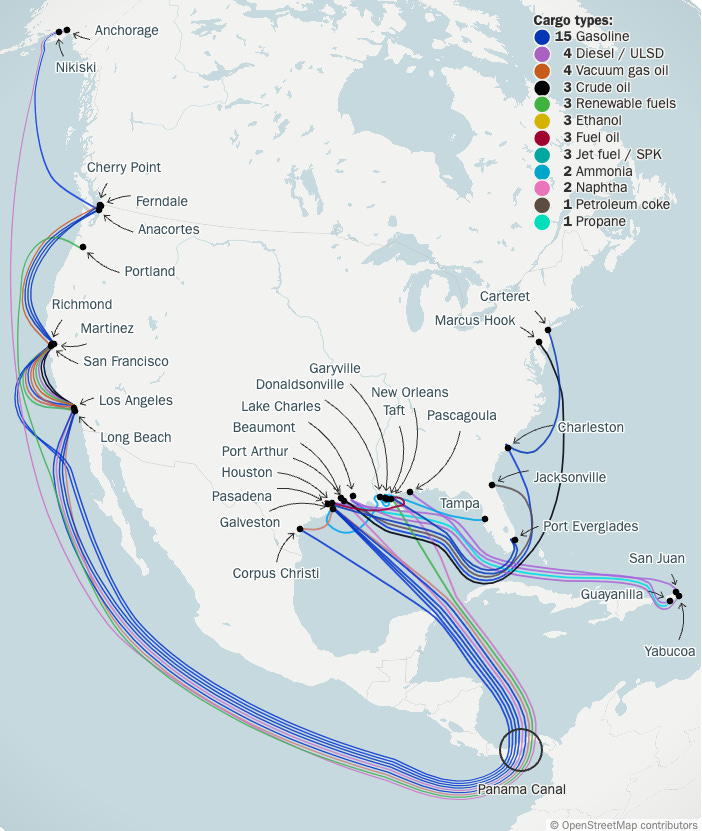
Thanks to Trump’s Jones Act Waiver, there have now been at least 45 cargo trips between US ports via non-US ships. [Cato]
Housing
Alex Armlovich on how making it easier to build housing both reduces rents and increases land values in the city of Tokyo. “The famous (relative) cheapness of Tokyo housing is not a story about cheap land. A one-acre detached house in central Tokyo would cost more than $100 million in dirt before you broke ground. The land is pricey but the structures are cheap. Admittedly, Tokyo’s rents and prices are not as cheap per square foot as buildings in the US Sunbelt’s midsize cities, but cheap by the standards of any 10-million-plus Anglosphere metro area. Tokyo built its way to relative affordability without ending up with low land values, and the values themselves look reasonable for a productive, agglomerated megacity that simply didn’t artificially restrict its own supply.” [Abundance and Growth]
Ezra Klein moderates a debate on housing policy between the leading Democrat candidates for Governor. [YouTube] And CA Yimby declined to endorse any candidate for governor, not because none of them had good housing plans, but because all of them did. [Cal Matters]
The house comes out with its response to the Senate’s 21st Century ROAD to Housing Act. The house bill notably does not contain the onerous restrictions on build-to-rent housing that the Senate bill does. [Politico]
Are homes sitting empty because it’s too expensive for people to sell them? “According to Flock Homes, for many retirees “the tax bill triggered by a sale far exceeds the cost of simply leaving the home empty.” This includes capital gains taxes (paid on the profit from the sale) and depreciation recapture taxes (which sellers of rental properties face). The federal capital gains exemption, which applies to the sale of primary residences, was not factored into the analysis of vacant homes. Mortgage payments were not included in the analysis, since many older homeowners own their homes outright.” [NYT]
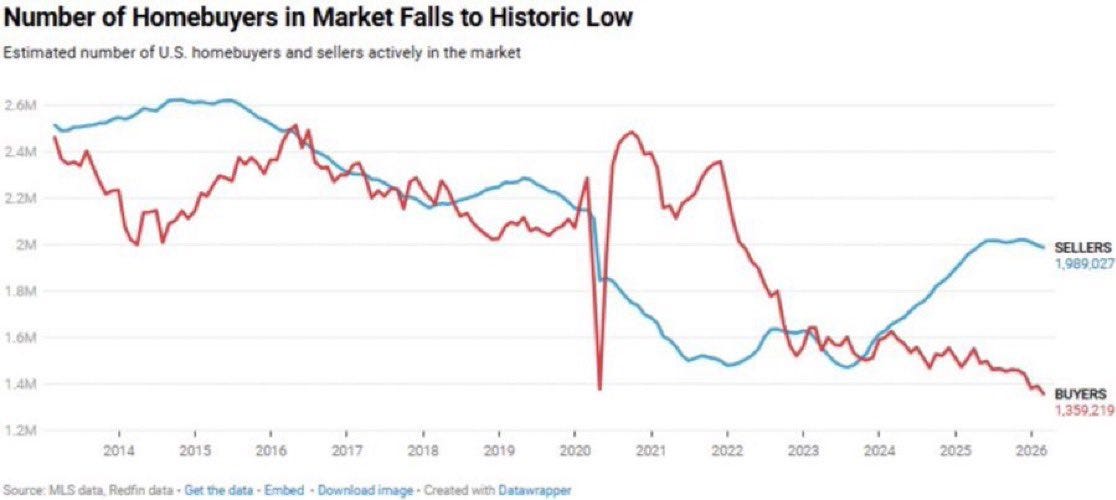
Number of sellers vs number of buyers in the US housing market. [X]